How to Find the Perfect Wine for Any Taste, Occasion, and Budget
A practical guide for Hong Kong wine buyers in 2026
Wine should not require a degree to choose well.
And yet most people — including people who drink wine regularly — approach every new purchase the same way: scanning the shelf, reading nothing useful on the label, and settling for something in the middle of the price range because it feels safe.
The right bottle exists for every palate, every dinner table, and every budget. The gap is not expertise. It is knowing which three questions to ask before you buy. Once you know those, the rest becomes simple.
This guide walks through exactly that — how to match wine to your taste, your occasion, and your budget, without needing to know the difference between a Burgundy and a Bordeaux before you start.
───
Why occasion matters more than wine knowledge
Most people try to choose wine by starting with the wine. They browse by region, by grape, by rating. This is why it feels complicated.
The people who consistently choose well — sommeliers, experienced buyers, the friend everyone texts before a dinner party — do it differently. They start with the occasion.
Who is this for? What are they eating? What does the room need to feel like? Is this a business dinner or a housewarming? A gift for someone you know well or someone you’re trying to impress?
The occasion answers most of the questions that the wine label cannot. A HK$280 Riesling is the right choice for a dim sum lunch and the wrong choice for a client dinner where the price of the bottle is part of the signal. A bold Shiraz works at a barbecue and falls flat at a delicate Cantonese banquet.
Start with the occasion. The wine follows.
───
How to identify your taste profile in two minutes
Before anything else, knowing roughly where your palate sits saves time and money. Most wine drinkers fall somewhere in one of four profiles — and once you know yours, you can navigate almost any wine list or shop with confidence.
Light and fruity describes wines with fresh red or citrus fruit flavours, low tannin, easy to drink on their own or with lighter food. Think Pinot Noir for reds, Pinot Grigio or Sauvignon Blanc for whites. These are the wines that almost everyone finds approachable and almost nobody finds challenging. Good starting point for new wine drinkers and reliable for mixed-taste group settings.
Bold and structured describes wines with more weight, depth, and tannin — the kind that pair with red meat, aged cheese, and richer food. Cabernet Sauvignon, Syrah, and Malbec sit here for reds. These wines often improve with a few years of age and are the category most associated with serious wine collectors.
Dry and crisp describes wines built around acidity rather than fruit — lean, refreshing, often mineral. Chablis, Champagne, dry Riesling, and Vermentino fit this profile. These are the wines that cut through rich food, perform brilliantly with seafood and Chinese cuisine, and tend to be underestimated by people who have not tried them with the right dish.
Off-dry to sweet describes wines with noticeable residual sugar — from lightly sweet Riesling through dessert wines and fortified styles. These are not just for dessert: a slightly sweet Gewurztraminer is one of the best pairings for spicy food and aromatic Chinese dishes.
If you are not sure which profile fits, think about the last wine you actually enjoyed. What did it taste like? That answer places you somewhere in this map — and that is enough to start making better choices.
───
What does each budget actually get you in Hong Kong?
Hong Kong has zero wine import duty — a policy in place since 2008 that makes the city one of the best places in the world to buy wine for the money. > TMD: Under HK$150 buys decent everyday drinking wine. The quality floor in HK at this price point is reasonable — drinkable Sauvignon Blanc, Shiraz, and Merlot from reliable producers in New World regions. For a casual Tuesday evening or cooking wine, this range is fine.
HK$150 to HK$300 is where quality starts to become genuinely interesting. At this range you access real regional character — a proper Clare Valley Riesling, an entry-level Burgundy, a Cru Beaujolais. This is the range where most everyday drinkers should spend for home consumption and casual entertaining.
HK$300 to HK$600 covers the bulk of gifting and mid-level business entertaining in Hong Kong. At this price you find bottles with real provenance — established producers from Bordeaux, Rhône, Tuscany, and Napa. A HK$400 wine in HK would cost twice that in London or New York.
HK$600 and above enters the territory of statement bottles — prestige occasions, senior client gifts, milestone celebrations. The duty-free pricing means bottles at this level represent exceptional value versus most other international markets.
───
How to match wine to specific occasions
Learn about Medium’s values
Casual dinner at home — spend in the HK$150 to HK$250 range, match the wine to the dominant flavour of the food. If the meal is rich, go with something with enough acidity to cut through it. If the meal is light, match it.
Client dinner or business entertainment — the bottle is part of the impression. Spend HK$350 to HK$600 and choose something with provenance you can speak to: a known Bordeaux château, a reputable Burgundy domaine, a serious Australian producer. Avoid anything too adventurous.
Corporate or personal gift — HK$400 to HK$800 depending on the relationship. If you do not know their taste, go with a high-quality Champagne or a versatile Pinot Noir — both are near-universally appreciated.
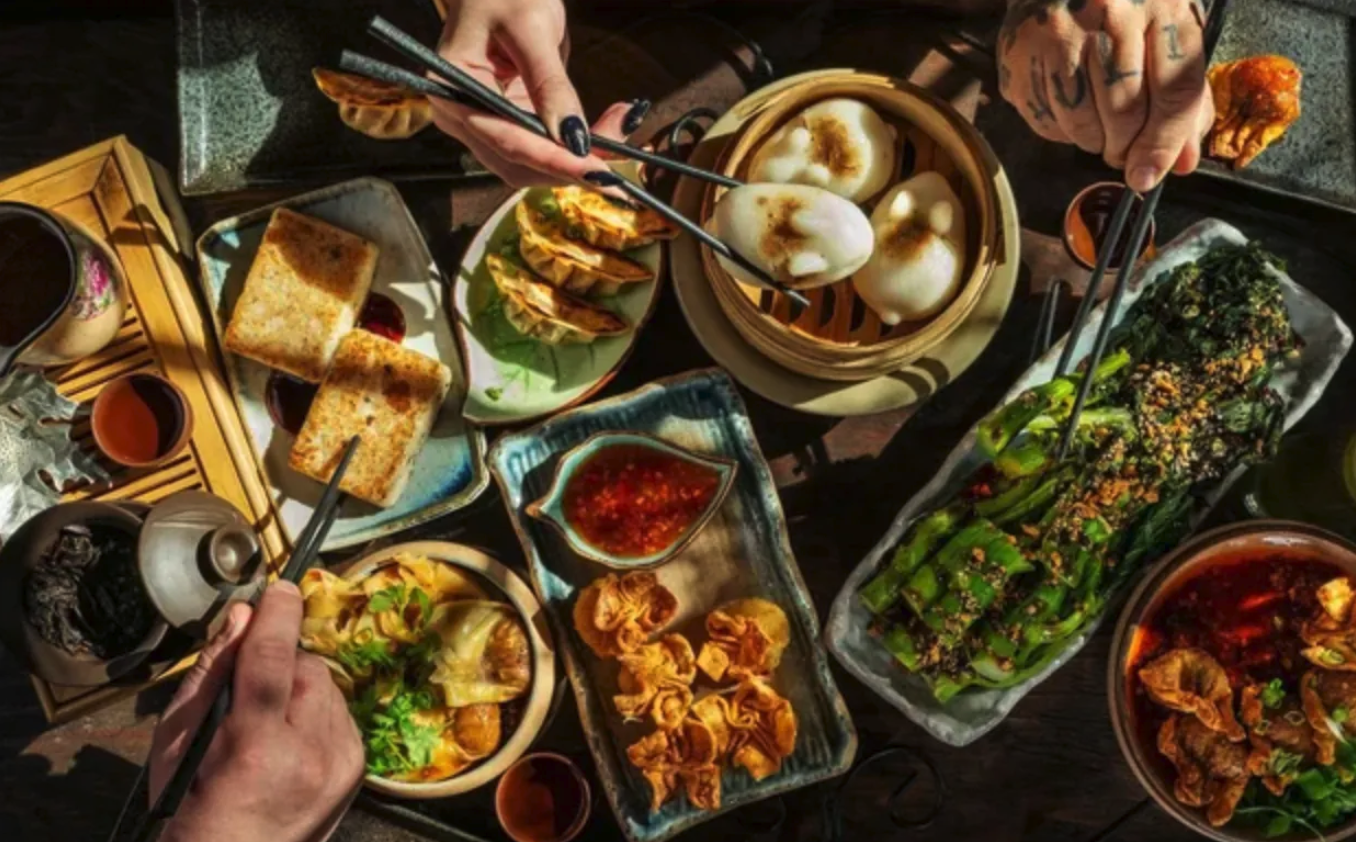
Chinese banquet or dim sum — Champagne and sparkling wine are the most versatile options. Aromatic whites — Riesling, Gewurztraminer, Pinot Gris — pair particularly well with seafood and lighter preparations. If you want red wine, choose something lighter and fruit-forward rather than heavy and tannic.
Celebration — Champagne is the default for good reason. A well-chosen sparkling wine works just as well for a group where the occasion matters more than the specifics.
───
The single most useful pairing rule
If formal pairing rules feel like too much to remember, one principle handles the majority of situations: match the weight of the wine to the weight of the food.
Light food needs light wine. Rich food can handle richer wine. The pairings that feel wrong — a bold Cabernet with a delicate sea bass, a sweet Riesling with a heavy stew — almost always violate this single principle. Get the weight right and the specifics matter less than most wine education suggests.
───
How to find the right wine in under 30 seconds
Knowing the principles above is useful. Applying them in the moment — standing in a wine shop before a dinner, or deciding the night before — is a different challenge.
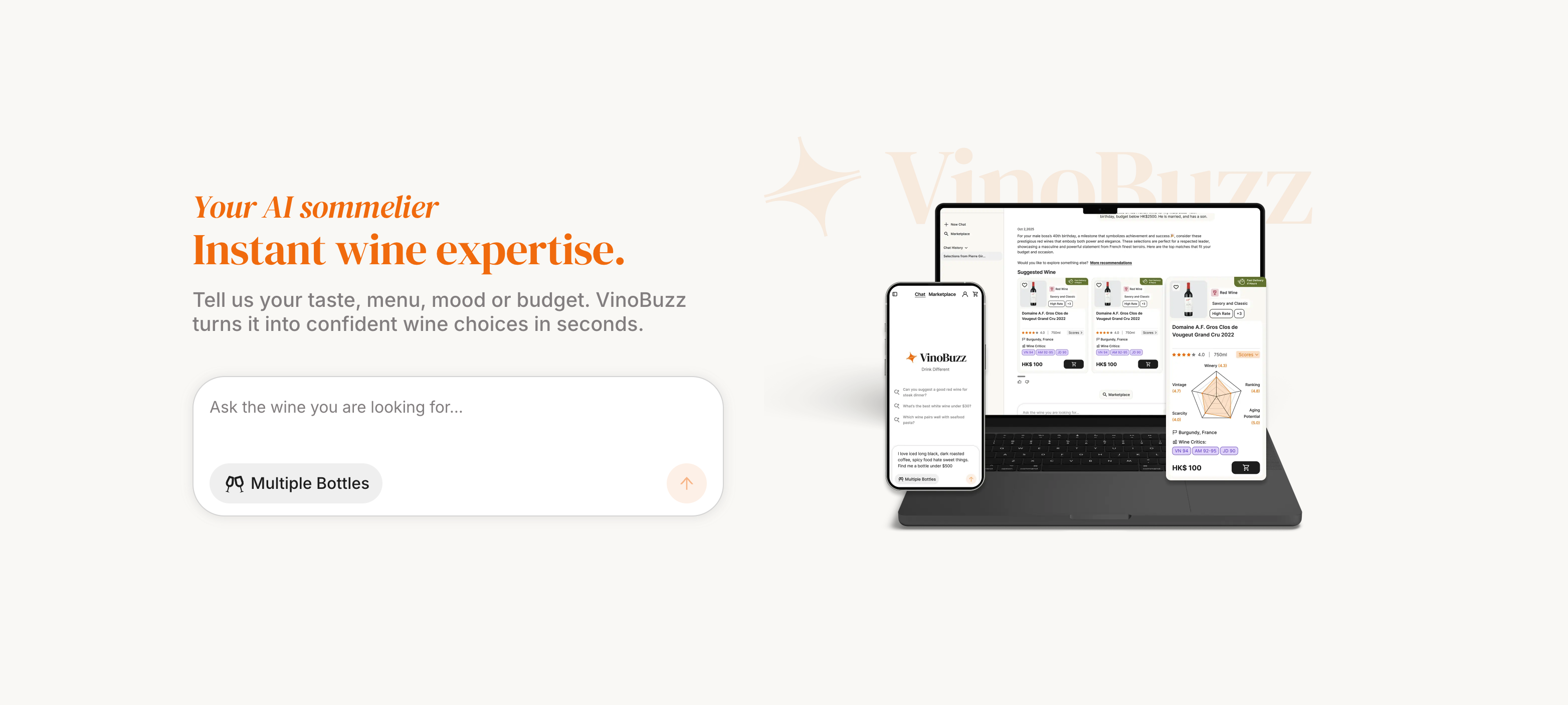
This is the problem VinoBuzz’s AI assistant Nora is built to solve.
Tell Nora the occasion, who it is for, what you are eating, and your budget. She reasons through those variables and returns a specific recommendation with the story behind it — not a list of options, but a choice you can speak to at the dinner table.
The recommendation improves over time. Every conversation adds to your taste profile, which means the tenth recommendation is sharper than the first.
For Hong Kong buyers specifically, Nora is trained on local context: Chinese cuisine pairings, HK-based inventory with same-day delivery, and the gifting occasions that dominate wine purchases in the city.
Try it at vinobuzz.ai.
───
Frequently asked questions about choosing wine
What wine is safe for a group with different tastes? > TMD: A light-to-medium bodied red such as Pinot Noir, or a fruit-forward white such as Pinot Gris or unoaked Chardonnay, works for the widest range of palates. Champagne and quality sparkling wine are the most universally accepted choice for celebrations and mixed groups.
Is more expensive wine always better?
No — but in Hong Kong’s duty-free market, the quality increase per dollar spent is steeper than most other cities up to around HK$600. Above that price point, you are increasingly paying for prestige, scarcity, and age potential rather than better immediate drinking experience.
What if I don’t like red wine?
White wine and sparkling wine are completely appropriate in nearly every context, including business entertaining and gifting. A well-chosen white wine from Burgundy or Alsace is among the most impressive bottles you can bring to a dinner.
How do I know if a wine is good quality without tasting it first?
Look for a producer with a track record, a recognised region, and a good vintage year. In Hong Kong, importers and retailers generally do not stock poor producers — the market is too competitive. If you are buying from a reputable source at a reasonable price for the region, the quality floor is generally high.
Can I use AI to help me choose wine?
Yes. VinoBuzz’s AI assistant Nora handles the full brief — occasion, taste preference, budget, food pairing — and returns a specific recommendation with a plain-English explanation. Available free at vinobuzz.ai.
───
VinoBuzz is Hong Kong’s AI-native wine platform. Nora is available free at vinobuzz.ai.
Bring Wine to Everyone